
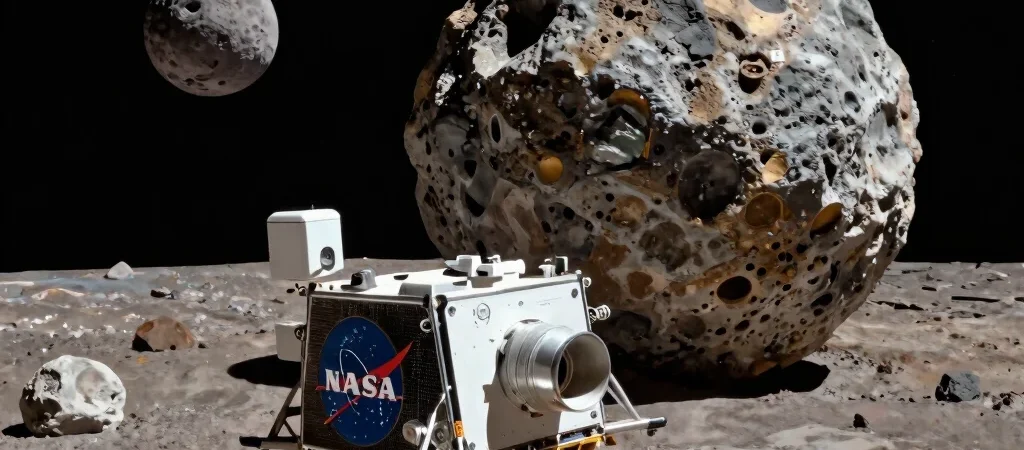
The test ended with a flash of dust millions of miles from Earth. NASA’s DART spacecraft had deliberately struck Dimorphos, a small moon orbiting the asteroid Didymos, to see whether a spacecraft could change an asteroid’s motion. It was not a rescue mission for Earth; it was a real-world experiment in how planetary defense might work.
A collision with a purpose
On September 26, 2022, DART hit Dimorphos at high speed. The target was a carefully chosen pair: Dimorphos circles Didymos, giving scientists a way to observe the change in its orbit from Earth. Neither asteroid posed a threat to our planet.
Measuring the change
After the impact, observations showed that Dimorphos’s orbital period around Didymos had shortened by about 32 minutes. The result confirmed that a spacecraft’s impact can alter an asteroid’s motion, including through material thrown away from the collision. That detail matters: the spacecraft did not act alone; the debris helped add to the push.
Why a test matters
DART demonstrated a possible tool, not a complete plan for every asteroid scenario. Any real response would depend on finding a hazardous object early and learning enough about its size, path and composition to choose an approach. The mission’s lasting lesson is practical: preparation starts with watching the sky and testing ideas before they are urgently needed.